Selective land clearing removes problem brush and unwanted trees while preserving the mature oaks, pecans, and native trees that give your land its value and character. Redhawk Land Services offers precision clearing for Houston-area properties where the goal isn’t a clean slate — it’s a cleaner, more open version of what’s already there.
Not every land clearing job calls for taking everything down. Some properties have decades-old live oaks, canopy trees, or natural features that any reasonable landowner would want to keep. Selective clearing is the solution when you want to remove the invasive growth and the scrub trees crowding out your desirable canopy — without sacrificing the trees that make the property worth having in the first place.
Selective land clearing is a targeted clearing method where specific trees, brush, and vegetation are removed based on predetermined criteria — typically species type, size, location, or health — while other trees and vegetation are deliberately left in place.
What makes selective clearing different from full land clearing? Full land clearing removes most or all vegetation from a site, typically to prepare ground for construction or complete pasture conversion. Selective clearing is a more surgical approach — the goal is to improve the existing landscape, not replace it. The result is land that feels open and managed without losing the canopy, privacy, or natural character that made it worth buying.
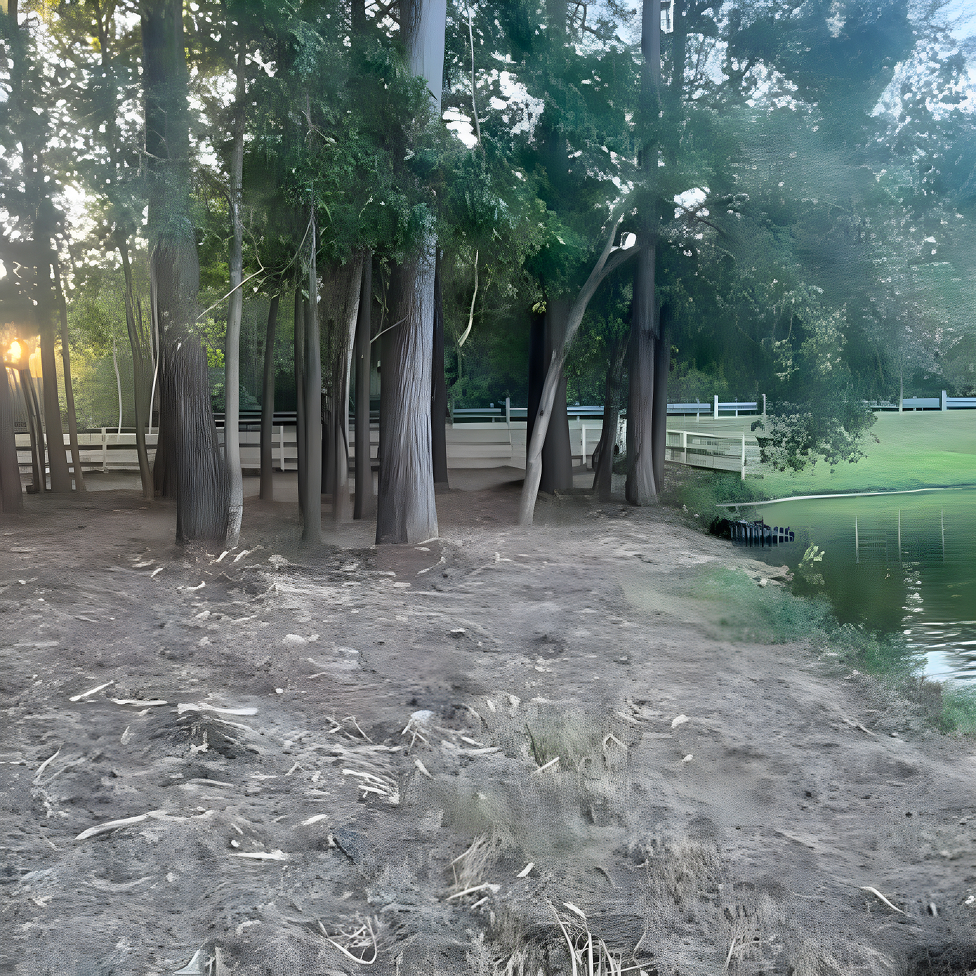
Selective clearing fits a specific kind of land improvement goal — and once you understand what it does well, the applications are easy to see.
Dense mid-story brush and saplings often crowd out mature trees, stealing sunlight, water, and root space. Selectively removing the understory growth opens the space beneath the canopy, improves tree health, and creates the kind of park-like landscape that’s both beautiful and functional.
Species like Yaupon, Tallow, and Cedar spread aggressively and can take over in just a few seasons. Selective clearing targets these problem species specifically, removing them without disturbing surrounding native vegetation that belongs there.
Large Houston-area residential lots and acreage properties benefit enormously from selective clearing that opens sight lines, creates usable open space under existing trees, and dramatically improves the property’s visual appeal without clear-cutting.
Property owners planning construction, a pond, a barn, or other improvements often want selective clearing to clean up the site and access the build area without removing mature trees that add value to the overall property.
Selective clearing is the most precision-dependent service Redhawk offers, and the free site walk is especially important here. You’ll walk the property together and mark — or describe clearly — which trees you want kept. Redhawk’s operator then works around those trees throughout the project, clearing only what’s been agreed upon.
The equipment of choice for selective clearing is forestry mulching, which allows the operator to work within a few feet of a desirable tree without damaging its bark, root system, or surrounding soil. The mulch layer left on the ground after clearing provides moisture retention and erosion control, which actually benefits the root zones of the trees being preserved.
For properties where selective clearing addresses the wooded sections but other areas need different treatment — pasture edges cleared of invasive brush, fence lines opened up, or trail access created — Redhawk combines selective work with pasture reclamation, fence line clearing, and trail cutting in a single project.
Selective clearing starts with an exceptionally thorough site walk because the precision required demands clarity upfront. Redhawk walks every section of the clearing area with you, and you identify — by flagging with tape, describing by species, or pointing — exactly which trees stay and which go. Any ambiguous trees are discussed before work begins.
Based on the walk, Redhawk’s operator develops a clear map of target species. Common targets include Yaupon holly, Chinese Tallow, Cedar, Hackberry, Greenbrier, and volunteer saplings competing with preserved canopy. Any species not on the target list is left standing unless you indicate otherwise.
Redhawk’s forestry mulching equipment works within 2–3 feet of a preserved live oak or fence line without damaging bark, root systems, or surrounding soil. Operators stay outside the drip line of preserved trees where practical. The mulch deposited around preserved trees acts as a beneficial layer — similar to what an arborist would apply.
After clearing, you walk every section with the Redhawk crew. Preserved trees are inspected for any incidental contact and concerns are addressed before the crew leaves. You receive follow-up care recommendations for any high-value specimen trees.
One of the most common concerns landowners have about selective clearing is whether the clearing process will damage the trees being preserved. It’s a legitimate question — heavy equipment operating near mature trees can compact root zones or cause bark damage if the operator isn’t experienced.
Redhawk’s mulching equipment operates on tracks or wide tires specifically to minimize ground pressure. Operators are trained to stay outside the drip line of preserved trees where practical and to avoid bark contact with the mulching head. The mulch material deposited around preserved trees actually acts as a beneficial layer — similar to what an arborist would apply around a tree’s root zone to retain moisture and regulate soil temperature.
For high-value specimen trees, it’s worth discussing with Redhawk during the site visit whether any additional protective measures make sense before clearing begins. The goal is always to leave the preserved trees in as good or better condition than they were found.
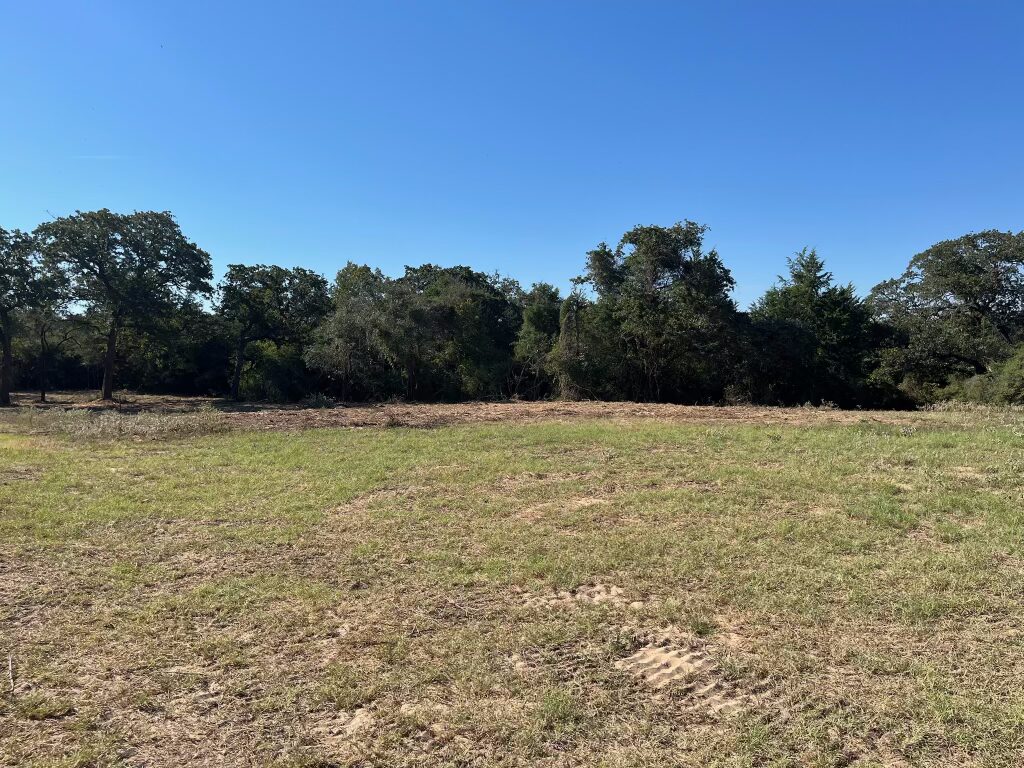
When Houston-area property owners search for land clearing in Houston, TX, they’re often looking for exactly what selective clearing delivers — a cleaner, more open version of their land without losing the trees that make it worth having. Redhawk provides selective land clearing for residential acreage, ranches, and rural properties throughout Houston and the surrounding area.
Katy, Fulshear, Richmond, and Sugar Land to the west are home to some of the highest concentrations of residential acreage in the region — where lot clearing and selective land clearing are the most common requests. We also serve Tomball, Spring, Magnolia, Conroe, and The Woodlands to the north, and Pearland, Friendswood, and Alvin to the south. Ranch and farm properties in Huntsville, Bastrop, Rosenberg, and Lake Jackson are also regularly served.
Learn more about our crew and our precision clearing approach, or view all of our land services.
Real feedback from property owners, contractors, and developers who trust us for reliable land clearing solutions. Their experiences reflect our commitment to quality workmanship, clear communication, and dependable results.
“I was initially nervous about clearing my land. I love a well-kept property, but I also value my privacy. Jack went above and beyond, walking the property with me several times to ensure he cleared exactly what I wanted while preserving the most beautiful trees.”
Trustindex verifies that the original source of the review is Google. My family has a couple of acres south of Rosenberg that needed clearing. A buddy recommended RedHawk, we couldn’t be happier with the outcome. Mr Cummings was very professional, on time, did an excellent job, but most importantly, fair priced, and in today’s economy, every dollar counts. I really appreciated the reliability that Mr Cummings provided us, we will definitely be using his services again.Trustindex verifies that the original source of the review is Google. Redhawk cleared some property of mine and did an outstanding job. They did more than i expected, gave me a very fair price, were there when they said they were going to be there. I have zero complaints with Redhawk and would 1000% recommend them to anyone needing property thinned out. Outstanding job Redhawk.Trustindex verifies that the original source of the review is Google. Jack came out to our property and recommended clearing our fence line. He gave us a great price and his team executed exactly what he promised. Will definitely use RedHawk again!Trustindex verifies that the original source of the review is Google. Extremely professional and great price. In just a day brought my property back to life.
The landowner drives that decision. Redhawk works from your direction — whether you mark trees to keep with flagging tape before the job, describe specific species to target, or walk the property together and make real-time decisions. The operator follows your guidance throughout the project and pauses to check on anything that isn’t clearly defined.
The most reliable method is orange or pink flagging tape — tied at eye level on any tree you want preserved. Redhawk can also walk the property with you before the job and verbally confirm each tree in a specific zone. If you have a clear species preference (all live oaks stay, all Yaupon goes), that instruction can be applied without marking individual trees.
Yes. Removing understory brush and competing vegetation reduces competition for water, sunlight, and soil nutrients. Many mature trees show improved vigor — better leaf coverage, stronger branch growth — in the seasons following a well-executed selective clearing project.
Selective land clearing in Houston typically runs $300–$800 per acre, reflecting the extra time required for precision work around preserved trees. Standard lot clearing and full land clearing are generally less expensive — $150–$500 per acre depending on vegetation density and terrain. Redhawk provides a free on-site estimate after walking your property. Call 832-664-7538 to schedule.
Selective clearing often takes more time per acre than full clearing because of the precision required, but it preserves property value that full clearing would eliminate. For many properties, it’s the higher-ROI option when factoring in what’s kept versus what’s removed.
Invasive and opportunistic species are the primary targets — Yaupon holly, Chinese Tallow, Hackberry, Greenbriar, Cedar, and volunteer saplings that compete with desirable canopy trees. Native species like live oak, post oak, pecan, and cedar elm are preserved by default unless the landowner specifies otherwise.
Selective clearing typically moves more slowly than full clearing — roughly 0.5–1.5 acres per day depending on tree density, target species, and how many preserved trees require careful maneuvering. Redhawk provides a time estimate as part of the free on-site quote.
Selective land clearing gives you control over how your property evolves. Contact Redhawk Land Services LLC to create a clearing plan that supports your vision and long-term goals.
