Pasture reclamation restores productive grazing acreage that’s been overtaken by invasive brush. Redhawk Land Services removes species like Huisache, Tallow, and Yaupon from Texas ranch and farm properties — giving livestock their pasture back without destroying the soil in the process.
If you’ve watched good grazing land slowly disappear under a sea of brush and saplings, you’re not alone. It’s one of the most common and frustrating problems facing Texas landowners. The good news is that most invaded pastures can be reclaimed — and with the right approach, they can produce healthy forage grass within a single growing season after clearing.
Pasture reclamation is the process of removing invasive trees and brush species from formerly productive grazing land and restoring conditions that allow native and improved grasses to grow. In Texas, this typically means clearing dense stands of Huisache, Chinese Tallow, Yaupon holly, Mesquite, and other fast-spreading opportunistic species that outcompete grass for water and sunlight.
According to Texas A&M AgriLife Extension, Huisache and Chinese Tallow are among the most problematic invasive species threatening Texas grassland productivity — both are recurring targets in Redhawk’s pasture reclamation work.
What does pasture reclamation involve? Pasture reclamation involves mechanically removing invasive brush, grinding or clearing debris, and preparing the soil surface for grass recovery. Redhawk uses forestry mulching as the primary method, which grinds vegetation in place and leaves a protective mulch layer instead of bare, eroded soil.
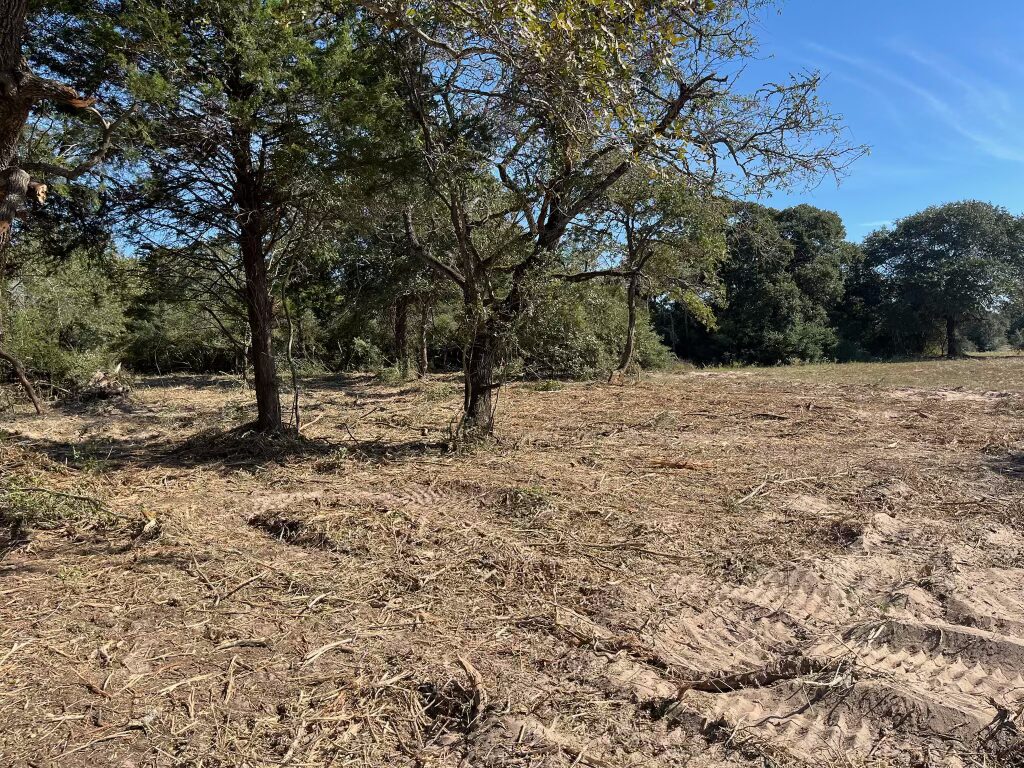
Most pasture loss doesn’t happen overnight — it creeps in over years, and by the time many landowners take action, a significant portion of their usable acreage is already gone. Watch for these warning signs:
Brush encroachment along fence lines and fence corners is often the first indicator. Invasive species get established there first, sheltered from grazing pressure, and then spread inward. If you’re also seeing thinning grass coverage, bare patches, or reduced carrying capacity — fewer head of cattle per acre — pasture reclamation is likely overdue.
Older pastures that haven’t had mechanical clearing in five or more years are particularly vulnerable in the Houston-area climate, where warm temperatures and high rainfall give invasive species every advantage they need to thrive.
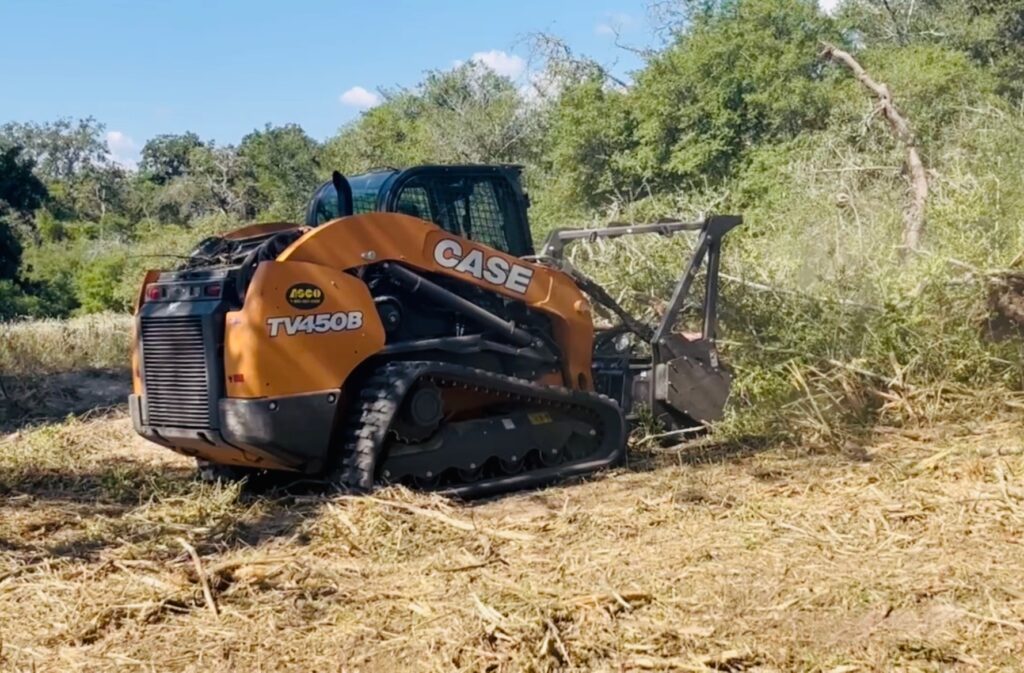
Redhawk’s pasture reclamation work starts with a free property walk. Every pasture is different — the type of invasive species, the density of coverage, the soil type, and your goals for the land all factor into the plan.
Rather than bulldozing brush into piles and burning them, Redhawk uses forestry mulching to grind invasive trees and brush directly into the soil. The mulch layer that results actually benefits the pasture — it holds soil moisture during dry spells, reduces erosion on slopes, and breaks down over several months to release organic material back into the ground. This sets your grass up for faster and healthier recovery than bare soil would allow.
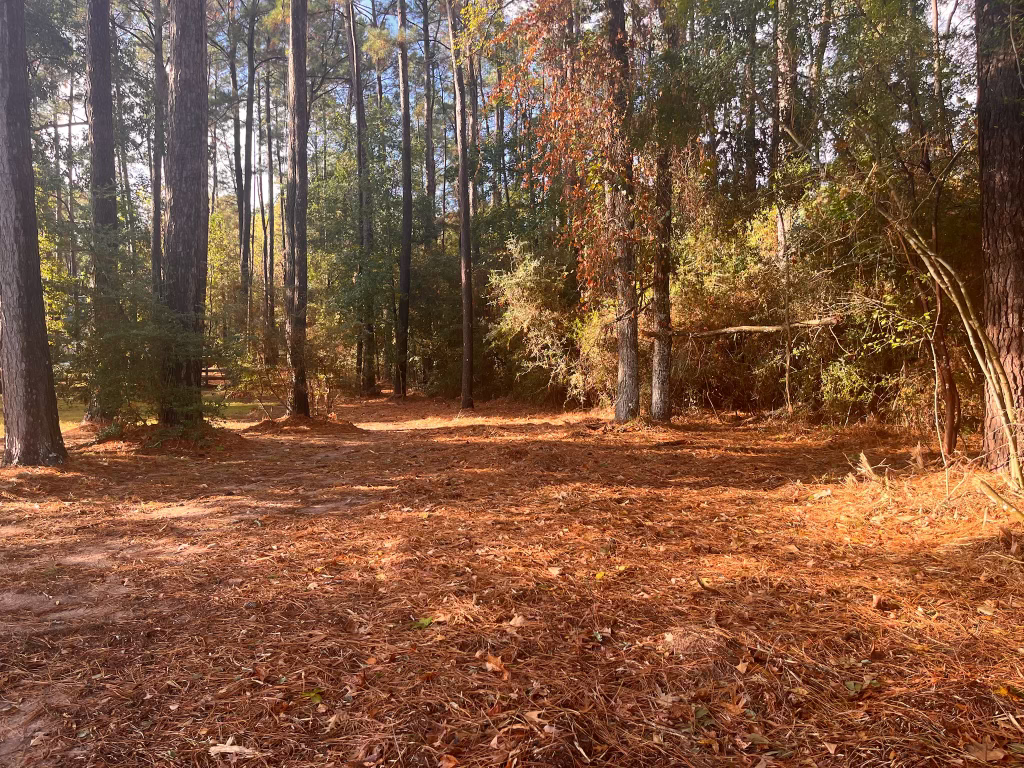
Not everything in an invaded pasture needs to go. Mature native trees — live oaks, pecans, cedar elms — provide valuable shade for livestock and shouldn’t be sacrificed. Redhawk’s operators practice selective land clearing techniques, targeting invasive species while preserving desirable canopy trees that add value to the pasture rather than detract from it.
Invasive brush almost always runs heaviest along fence lines, and clearing the fence corridor is an important part of any complete pasture reclamation project. Redhawk’s fence line clearing work ensures that the fence is accessible, protected from damage by encroaching growth, and easier to maintain long-term.
Grass recovery timelines vary by soil type, rainfall, and the season you clear. In general, cleared pastures in Southeast Texas that are cleared in fall or early spring — ahead of the growing season — show noticeable grass establishment within 60–90 days. Full pasture productivity typically returns within one to two growing seasons.
Some species, particularly Huisache and Yaupon, will attempt to resprout from root crowns after clearing. A follow-up herbicide application 6–12 months after mechanical clearing is often the most cost-effective way to address resprouting and protect your investment. Redhawk can advise on timing and recommend trusted applicators if this step applies to your property.
Redhawk walks the pasture with you to identify invasive species present, estimate coverage density, and discuss your goals — cattle conversion, browse improvement, or hay meadow restoration. The site walk is free with no obligation.
Redhawk uses forestry mulching as the primary method, grinding invasive trees and brush directly into the soil. The mulch layer holds moisture during dry spells, reduces erosion on slopes, and breaks down over months to release organic material — setting grass up for faster recovery than bare soil allows.
Not everything in an invaded pasture needs to go. Mature live oaks, pecans, and cedar elms provide valuable livestock shade. Redhawk’s operators target invasive species while preserving canopy trees that add value to the pasture.
At job completion, Redhawk provides follow-up recommendations — including herbicide timing for Huisache or Yaupon resprouting — so your investment holds long-term.
This service is built for working ranches and farm properties, but it’s also the right solution for any landowner who wants to restore the productivity and usability of their acreage. Cattle and horse ranchers in the Houston, Huntsville, Bastrop, and Lake Jackson areas deal with these same invasive species problems every season.
Hobby farm owners and large residential landowners who want open, manageable land — whether for aesthetics, wildlife, or recreational use — also benefit from the same reclamation work. The goal doesn’t have to be livestock production; it just has to be land that works for you instead of against you.
For questions about whether your property is a good fit, contact Redhawk for a free on-site estimate. The visit is free, and you’ll leave with a clear plan and a firm price.
Redhawk Land Services serves cattle ranchers, horse farm operators, and hobby farm owners throughout Southeast Texas. Our crews regularly work in Waller, Montgomery, Grimes, and Walker counties — prime ranch country north of Houston along the I-45 and US-290 corridors. We also serve Brazoria, Matagorda, and Wharton counties to the south, where Gulf Coast moisture makes invasive species pressure especially severe.
Communities we regularly serve include Huntsville, Angleton, Lake Jackson, Wharton, El Campo, Bay City, Conroe, and Navasota. Learn more about our crew, or see all of our land services.
Real feedback from property owners, contractors, and developers who trust us for reliable land clearing solutions. Their experiences reflect our commitment to quality workmanship, clear communication, and dependable results.
“I was initially nervous about clearing my land. I love a well-kept property, but I also value my privacy. Jack went above and beyond, walking the property with me several times to ensure he cleared exactly what I wanted while preserving the most beautiful trees.”
Trustindex verifies that the original source of the review is Google. My family has a couple of acres south of Rosenberg that needed clearing. A buddy recommended RedHawk, we couldn’t be happier with the outcome. Mr Cummings was very professional, on time, did an excellent job, but most importantly, fair priced, and in today’s economy, every dollar counts. I really appreciated the reliability that Mr Cummings provided us, we will definitely be using his services again.Trustindex verifies that the original source of the review is Google. Redhawk cleared some property of mine and did an outstanding job. They did more than i expected, gave me a very fair price, were there when they said they were going to be there. I have zero complaints with Redhawk and would 1000% recommend them to anyone needing property thinned out. Outstanding job Redhawk.Trustindex verifies that the original source of the review is Google. Jack came out to our property and recommended clearing our fence line. He gave us a great price and his team executed exactly what he promised. Will definitely use RedHawk again!Trustindex verifies that the original source of the review is Google. Extremely professional and great price. In just a day brought my property back to life.
Redhawk commonly clears Huisache, Chinese Tallow, Yaupon holly, Mesquite, and other opportunistic brush species that invade Texas pastures. The specific species present on your property are assessed during the free site visit, and the clearing approach is tailored accordingly.
Late fall through early spring is ideal for Southeast Texas. Clearing before the spring growing season maximizes grass establishment in the same year. Fall clearing also avoids peak wildfire season. That said, Redhawk performs reclamation year-round — summer clearing is fully effective, though grass recovery begins in fall rather than immediately.
Yes. In most cases, native and improved grasses recover well after mechanical clearing, particularly when mulching is used instead of bulldozing. Recovery is fastest when clearing is done ahead of the growing season and when soil health is preserved during the clearing process.
For most Texas properties, a follow-up herbicide treatment 6–12 months after clearing controls resprouting, and a second mechanical clearing every 5–8 years maintains pasture health. Properties with very aggressive invasive pressure may benefit from more frequent maintenance.
Redhawk is experienced working on active ranches and farms. The crew coordinates gate management and equipment movement with you to keep livestock safely separated from the work area throughout the project.
Pricing is based on acreage, vegetation density, and terrain. Redhawk provides a free, no-obligation on-site quote after walking the property with you — there are no hidden fees or surprises after the job starts.
If your pasture is no longer working the way it should, we can help restore it. Contact Redhawk Land Services LLC to schedule a walkthrough and build a pasture reclamation plan that fits your goals.
