Forestry mulching is the fastest, cleanest way to clear overgrown land in Southeast Texas. Redhawk Land Services grinds trees and brush directly into nutrient-rich mulch on site — no burning, no hauling, no topsoil damage. If you’ve got Yaupon, Mesquite, or volunteer trees taking over your property, this is the solution built for Texas land.
Overgrown acreage is one of the most common challenges facing Houston-area landowners.
Brush and saplings spread quickly, and left alone for even a season or two, they can block access roads, choke out grass, and turn a usable pasture into an impenetrable thicket. Traditional clearing methods — bulldozing and burning — get the job done, but they also strip the topsoil, leave ruts, and create liability and air quality concerns. Forestry mulching takes a different approach, and for most Texas properties, it’s the smarter one.
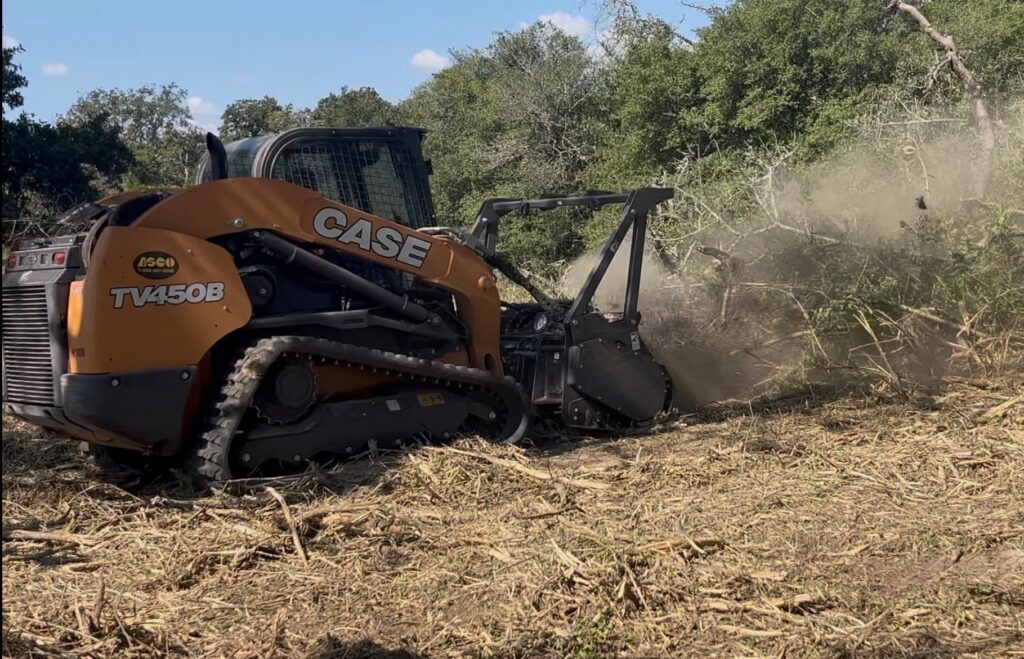
Forestry mulching is a single-machine land clearing method where a specialized piece of equipment — called a forestry mulcher or mastication machine — shreds trees, brush, and undergrowth into fine wood chips and deposits them directly onto the soil surface. The entire process happens in one pass.
What is forestry mulching used for? Forestry mulching is used to clear wooded and overgrown land without the need for burning, debris hauling, or heavy soil disturbance. It’s effective on residential lots, ranch land, farms, and rural properties where preserving soil health and minimizing disruption matters.
The mulch layer left behind is far from waste. It acts as a natural ground cover that holds moisture, suppresses weed regrowth, and breaks down over time to feed the soil. Compared to leaving bare dirt after a bulldoze job, you’re setting the land up for healthier grass and vegetation recovery.
The choice between mulching and traditional clearing comes down to a few key factors: what you’re clearing, what you want the land to look like afterward, and how much you’re willing to spend on hauling and debris removal.
Bulldozing is powerful, but it’s also destructive. The blade pushes trees and brush into piles that then have to be burned or hauled off — adding time, cost, and in many Texas counties, burn permit headaches. It also compacts and displaces topsoil, which means you may be fighting erosion and poor grass coverage for years after the job is done.
Forestry mulching machines are precision tools. The operator can navigate around mature oaks, pecans, or fence lines you want to keep, targeting only the growth you want removed. For properties where selective land clearing matters — protecting those old-growth trees while clearing the scrub beneath them — mulching is often the only method that can do both at once.
Is forestry mulching cheaper than bulldozing? In most cases, yes. There are no hauling fees, no landfill tipping charges, and no burn permit costs. The overall project price is often lower, and the land is left in better condition than after traditional methods.
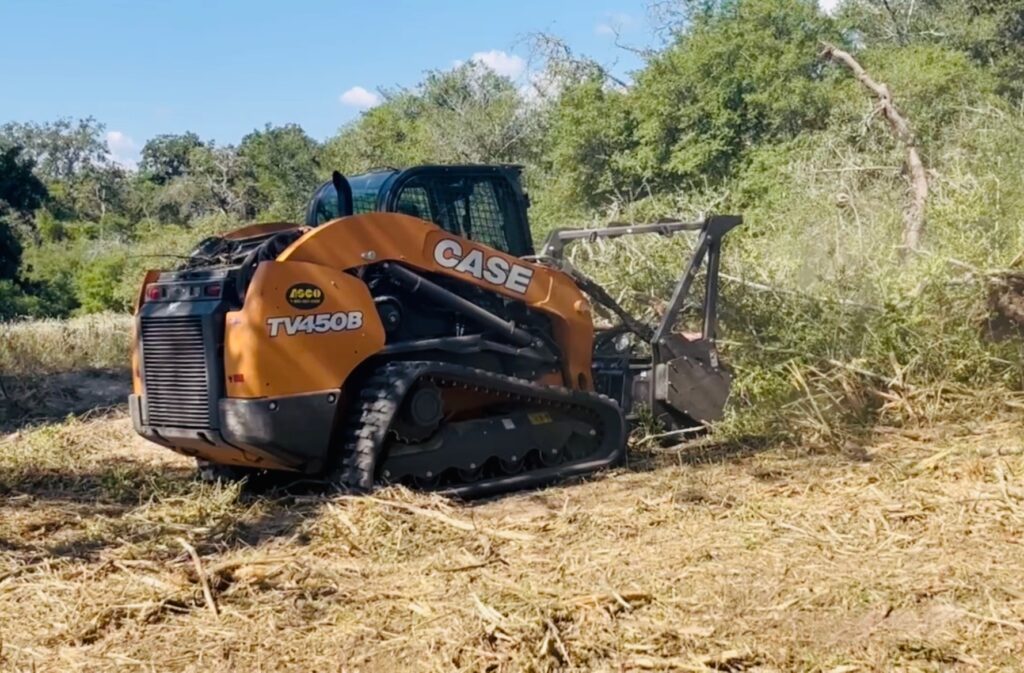
like Yaupon holly, Huisache, Tallow trees, and Mesquite are ideal candidates. These fast-growing opportunists spread aggressively, and mulching knocks them down and chops up the root crowns in one step — slowing regrowth significantly compared to simple hand-cutting.
that would take days of chainsaw work are cleared in hours by a mulching machine.
are another common use. Rather than hand-cutting or spraying herbicide along hundreds of feet of fence, a mulching head can clear a controlled corridor fast. (Redhawk’s fence line clearing service often incorporates mulching for exactly this reason.)
is one of the most impactful uses of forestry mulching in Texas. When brush has taken over grazing acreage, mulching can restore usable pasture ground without the soil damage that comes with a dozer push. This pairs naturally with Redhawk’s pasture reclamation services for properties where livestock productivity is the end goal.
Texas wildfire seasons have become longer and more intense, and dense brush is the primary fuel. Forestry mulching is one of the most effective fire risk reduction strategies available to rural property owners because it eliminates the standing and dead vegetation that allows a ground fire to spread rapidly.
Unlike burning — which creates its own danger and requires permits — mulching removes the fuel load while leaving the land stabilized. No loose debris. No open flame. No risk to neighboring properties. This is also why many landowners pair mulching with brush clearing and fire break mitigation work along the perimeters of their property.
Redhawk’s team walks your property with you, listens to your goals, and evaluates the terrain and vegetation. You receive a clear, upfront quote with no hidden fees.
On the day of service, the crew arrives with the right equipment. The mulching process is done systematically, with ongoing communication to protect any trees or areas you want to keep.
After completion, you walk the property with the team to ensure everything meets your expectations. You’re left with clean, usable land and a natural mulch layer that benefits the soil.
Most commercial forestry mulchers process trees up to 6–8 inches in diameter comfortably, and some machines handle up to 12 inches depending on the species. Hardwoods like live oak take more time than softer species. Redhawk assesses your specific tree types during the free site visit and confirms what the equipment can handle before work begins.
Will mulching prevent brush from growing back?
No — it’s actually one of the least soil-disruptive clearing methods available. The machine runs on tracks or wide tires to minimize ground pressure, and the mulch layer it deposits helps retain moisture and prevent erosion. This is a major advantage over bulldozing, which compacts and displaces topsoil.
Light to moderate brush typically clears at 1–2 acres per day. Dense tree cover or heavy hardwoods will slow the pace. You’ll get a time estimate as part of your free on-site quote from Redhawk.
Absolutely. Redhawk commonly combines mulching with pasture reclamation, fence line clearing, trail cutting, and selective clearing to provide full-property land improvement in a single project.
Our Mission To deliver efficient, eco-conscious land clearing solutions that empower property owners to unlock the full potential of their land.
