
Why Most Texas Landowners Now Skip the Bulldozer for Brush

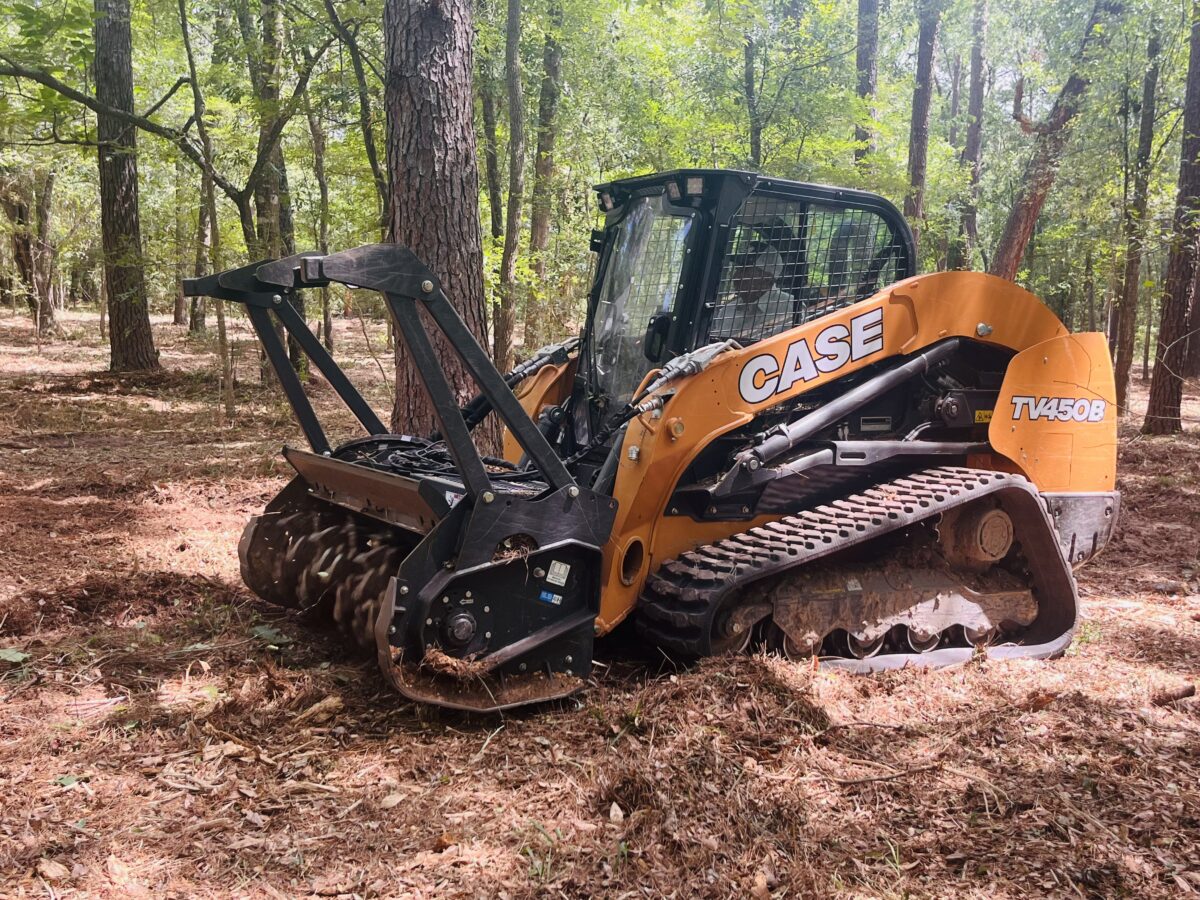
Bulldozing used to be the default answer for overgrown Texas acreage: push it, pile it, burn it. That approach still works, but it comes with a real cost most landowners don’t think about until the bill arrives — hauling fees, landfill charges, burn permits, and topsoil that takes years to recover. Forestry mulching skips all of that. One machine grinds standing brush and trees into mulch on the spot, in a single pass, with no debris to haul and no fire to manage. That’s why it’s become the go-to method for Texas landowners dealing with overgrowth.
What Is Forestry Mulching?
Forestry mulching is a land clearing method that uses one machine to cut, grind, and deposit trees and brush as mulch right where they stood. There’s no hauling debris away and no burning. The mulch layer left behind helps the soil retain moisture and resist erosion, which gives the land a head start on recovery instead of leaving it bare.
It’s a different process than what most people picture when they think of clearing land. Instead of pushing vegetation into piles with a dozer blade, a mulching head shreds it into wood chips in a single pass, right on the spot.
How Forestry Mulching Works
A forestry mulcher is usually a skid steer or tracked machine fitted with a rotating drum head. The drum spins fast enough to shred standing brush, saplings, and smaller trees into mulch as the machine moves forward. Most commercial units handle trees up to 6 to 8 inches in diameter without trouble, and some larger machines manage trunks up to 12 inches depending on the species.
Did You Know? Hardwoods like live oak generally take longer to process than softer brush like Yaupon or Chinese Tallow, since denser wood resists the mulching drum more.
The machine runs on tracks or wide tires built to spread weight across a larger surface, which keeps ground pressure low. That matters because heavy equipment that compacts soil can cause drainage and root-health problems that last for years.
Forestry Mulching vs. Bulldozing
Landowners comparing methods usually want to know which one actually saves money and leaves the property in better shape.
| Factor | Forestry Mulching | Bulldozing |
| Debris handling | Stays on-site as mulch | Hauled off or burned |
| Soil impact | Low ground pressure, minimal disturbance | Compacts and displaces topsoil |
| Permits | No burn permit needed | Burn permit often required |
| Precision | Can work close to preserved trees | Less precise around obstacles |
| Speed on dense brush | Fast, single-pass | Slower with piling and hauling |
Pro Tip: If your property has mature trees you want to keep, ask whether the crew will be running a mulching head near the trunks. The lower ground pressure and tighter maneuvering make it far less likely a preserved tree gets damaged during the job.
What Forestry Mulching Handles Best
Forestry mulching isn’t the right fit for every job, but it’s the clear winner for a specific set of situations.
- Invasive brush species. Yaupon, Huisache, and Chinese Tallow spread aggressively across Texas acreage. Mulching knocks down the growth and chops up root crowns in one pass, slowing regrowth more than hand-cutting alone.
- Pasture reclamation. When brush has swallowed grazing land, mulching restores usable acreage without the soil damage a dozer push causes. It pairs naturally with broader pasture reclamation work where livestock productivity is the goal.
- Fire risk reduction. Dense, dry brush is the primary fuel behind fast-moving ground fires. The Texas A&M AgriLife Extension Service lists mechanical brush control as a core tool for reducing that fuel load, and mulching removes it without the danger or permitting hassle that comes with burning. Many landowners pair it with brush clearing along property perimeters for added protection.
- Overgrown fence lines. Hand-cutting or spraying herbicide along hundreds of feet of fence takes time. A mulching head clears a controlled corridor in a fraction of that.
How Much Does Forestry Mulching Cost?
Cost depends on acreage, vegetation density, and terrain. Light brush clears faster and costs less per acre than dense cedar or heavy hardwood stands. Because there are no hauling fees, landfill charges, or burn permits involved, the total project cost is often lower than traditional bulldozing, even on larger properties.
Did You Know? Skipping hauling and landfill fees alone is often enough to make mulching the more affordable option, even though the equipment looks like a bigger investment up front.
The most accurate way to get a number for your property is a free on-site estimate, since brush density varies so much even across neighboring properties.
The Forestry Mulching Process
A professional mulching job follows a consistent path from first call to final results.
- Free site visit. The crew walks your property, evaluates terrain and vegetation, and discusses your goals.
- Upfront quote. You get a clear price with no hidden fees before any equipment arrives.
- Mulching execution. The crew works systematically through the site, staying in communication about any trees or areas you want preserved.
- Final walkthrough. You walk the finished property together to confirm the results meet your expectations.
If your project also touches selective clearing around mature trees, mention it during the site visit. Mulching is often the only method precise enough to do both jobs in the same pass.
Is Forestry Mulching Right for Your Property?
Forestry mulching tends to be the best fit when a property has dense brush, invasive species, or fire-risk vegetation that needs to come down without stripping the soil bare. According to the Texas A&M Forest Service, mulching equipment can shred standing trees up to several inches in diameter while keeping soil disturbance low, which lines up with the equipment behavior our crews see across Southeast Texas properties.
If your goal is a complete bare-ground reset for new construction, full clearing or bulldozing might still make more sense. But for most ranch, pasture, and residential acreage work, mulching gets the job done faster and leaves the land healthier.
Clear Your Land Without the Hauling or the Hassle
Forestry mulching turns months of brush-clearing dread into a single-day job, all while protecting the soil underneath. Whether you’re fighting back invasive Yaupon, reclaiming pasture, or cutting fire risk before summer, mulching is built to handle Texas-sized overgrowth without the burn piles or landfill fees.
Redhawk Land Services LLC offers free, no-obligation site visits across Houston and the surrounding Southeast Texas region. Contact us today to get a clear plan and an honest price for your property.
Frequently Asked Questions
What is forestry mulching?
Forestry mulching is a single-machine land clearing method that cuts, grinds, and deposits brush and trees as mulch directly on the soil. It skips the hauling and burning required by traditional clearing methods.
Is forestry mulching cheaper than bulldozing?
In most cases, yes. There are no hauling fees, landfill charges, or burn permit costs, and the leftover mulch layer helps the soil recover faster than bare, compacted ground.
How long does forestry mulching take per acre?
Light to moderate brush typically clears at 1 to 2 acres per day. Dense cedar or heavy hardwood stands take longer. A free site visit gives you a specific time estimate for your property.
Does forestry mulching damage the soil?
No. It’s one of the least disruptive clearing methods available because the equipment runs on tracks or wide tires that minimize ground pressure, and the mulch layer helps prevent erosion.
Can forestry mulching be combined with other services?
Yes. It’s commonly paired with pasture reclamation, fence line clearing, and selective clearing to handle a full property in one coordinated project.